
The Impacts of Unsafe Drinking Water on Canadian Reserves
ISHU1036: Indigenous Studies
what are water advisories?
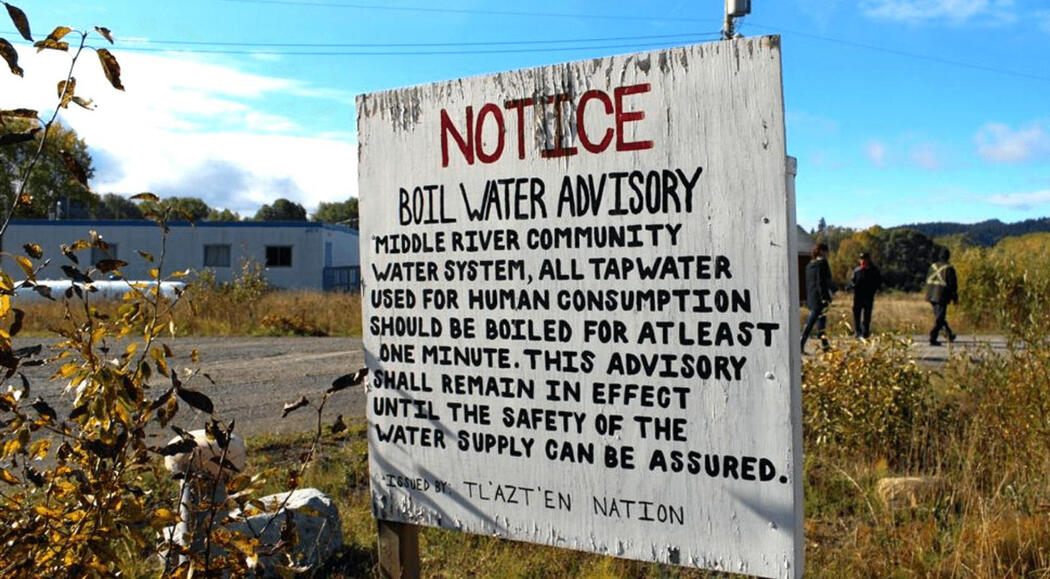
Water advisories are preventive health protection issued to inform people about potential health risks to drinking water. Protection messages are used to warn affected people that the drinking water is unsafe or contaminated. Before any major water quality complications, water advisories are announced.Three types of drinking water advisories:1. Boil water advisories
Home users are cautioned to boil their tap water for at least 1 minute before drinking, cooking, washing produce etc.2. Do not consume advisories
Water systems are possibly contaminated with contaminants such as lead which cannot be removed by boiling. Also called do not drink advisories. People are not allowed to use tap water to cook, drink, feed pets, wash produce etc.3. Do not use advisories
Do not use advisories are issued to alert the people that their tap water cannot be used at all. There are potential health risks if water is used and the water system has pollutants that cannot be removed by boiling.
why do they exist?
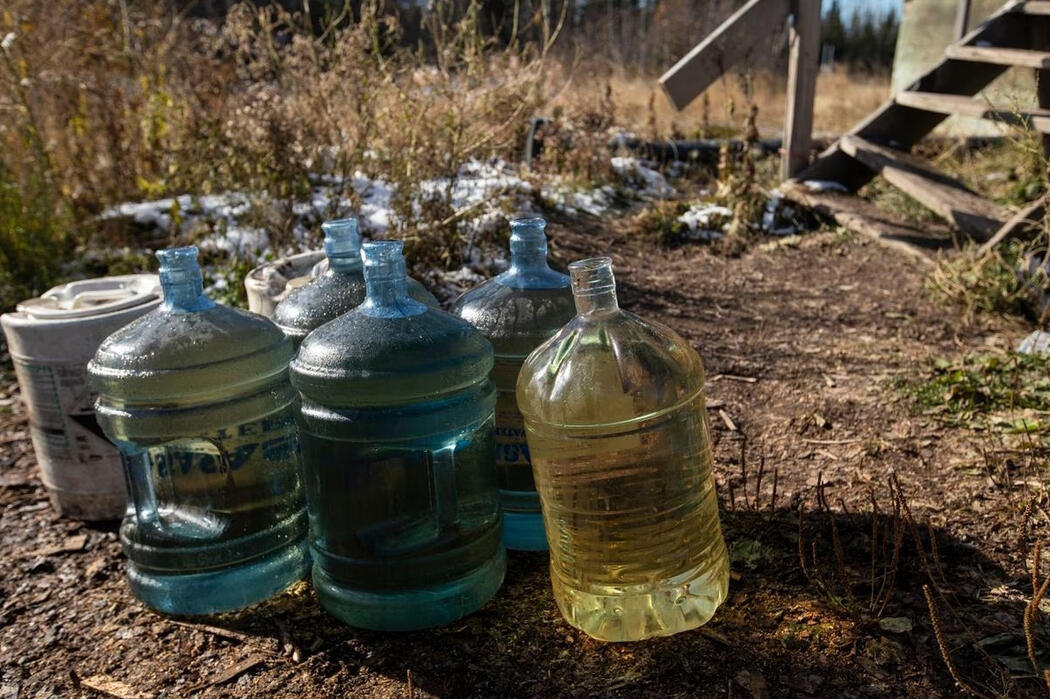
Water advisories are implemented to inform the community about the possible health concerns associated with ingesting water. Drinking water advisories are frequently given in advance of problems with the quality of drinking water as they are precautionary in nature and might impact one property or an entire neighborhood. There are various types of these advisories such as, do not use, do not ingest, or boil water. If there are issues with the entire drinking water system, the community could publish an advisory.The first reason why water advisories exist is that water could be contaminated by pollution from large institutions which frequently happens in many First Nation communities.Second, broken water lines which cause bad smell and discolored water. These signs can be seen in many communities which affect their daily lives.Lastly, equipment failure is a common problem in remote areas as materials that are needed for the water systems are hard to retrieve and to ensure that everything operates smoothly and that safe water systems are in place. The more remote a location is from the reserve, the more difficult and costly it is to provide the support needed to establish and maintain these water systems.
how does this affect the community?
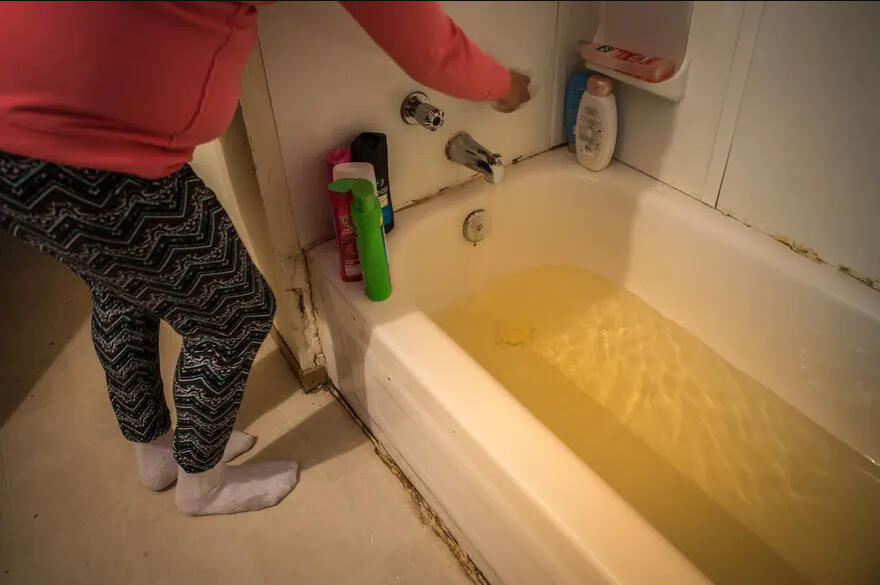
Tara Sakanee runs a bath at her home in Neskantaga. She says the water is usually varying degrees of yellow in colour and complains of itching and dry skin after showers. Photograph: Chris Donovan
The water advisories impact the Indigenous communities in a number of ways.1. Contaminants in the water can cause long and short term health issues.
In October 2020, Hundreds of Neskantaga residents were evacuated due to high levels of hydrocarbons in the water. It had an oily sheen and officials were forced to shut down the town’s water supply. Drinking water with high levels of hydrocarbons can result in diarrhea, coma, seizures, irregular heart rhythms or damage to the kidneys or livers. If the hydrocarbonic water enters the lungs, it can cause irreversible damage to the lungs, eventually leading to death.2. Mental health is severely impacted
Having running water in one’s home is associated with an 80% reduction in the odds of reporting depression. Having a toilet and septic system is associated with a reduction in the odds of reporting depression by one third, and a halving of the odds of reporting a gastrointestinal illness. The psychological effects of the water boil advisories have damaged the trust of multiple generations on the reserve.3. Damaging the relationship between the government and community.
There is a constant conflict with the government due to the lack of direction on funding drinking water and water systems. The government is aware that Indigenous reserves do not have access to clean drinking water but has failed to take accountability. When the communities present the issue of clean water, they are often pacified with broken promises.4. Lowers quality of life
Poor water and sanitation contributes to the housing shortages on reserves. The Neskantaga residents are provided bottled water to survive throughout the week. Living under a water advisory means that you cannot simply summon clean water by turning on the faucet. You must boil or treat the water before using, burdening daily life. Boiled water often does not meet commonly accepted standards.5. Cultural and ceremonial practices are damaged
Indigenous communities are unable to practice and honour their ceremonial practices involving water. Water is seen as medicine and the inability to drink one’s own water severs their connection to their culture. Traditional food systems such as hunting and fishing are affected.
over 10,000 days of boiling water
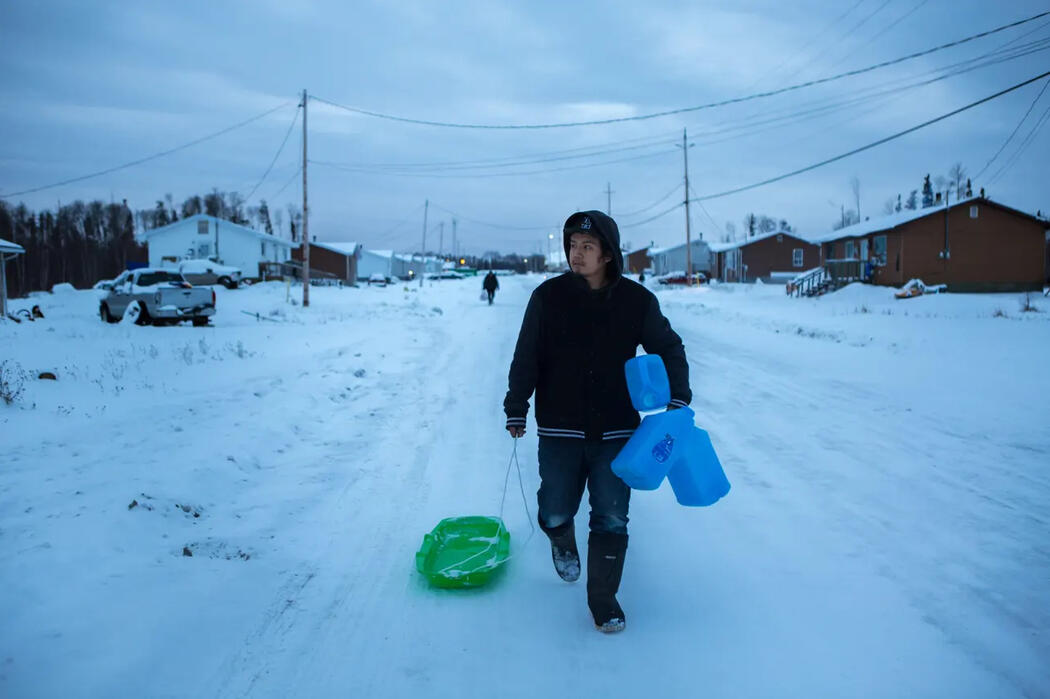
Ashley Sakanee walks home with three jugs of water that he filled up at the community’s osmosis machine, in Neskantaga First Nation in northern Ontario. He said he makes three or four trips a week to fetch water for drinking, cooking and bathing. Photograph: Chris Donovan
The Neskantaga First Nation is made up of approximately 400 people of which 300 live on the reserve. The community is located approximately 436 kilometers northeast of Thunder Bay, Ontario, and 180 kilometers northeast of Pickle Lake, Ontario. Currently, this community has been under boil water advisories for over 10,000 days and counting. The community has not had clean water to drink in over 3 decades, which is the longest of any other First Nations community in Canada’s history.The contaminated water has caused many health issues for the residents of the Neskantaga First Nation including skin rashes, sores, and mental health issues to name a few. These boil water advisories can range from boiling water before drinking to not consuming the water at all. There are high levels of bacteria and other harmful elements such as uranium in certain First Nations communities.The former Neskantaga chief, Chris Moonias, explains in an interview with CBC, that the drinking water problem has been an issue since the early 1990s. The government-funded water treatment facility proved to be inadequate soon after its construction. Moonias stated, “Every time we fix something, something else breaks”. The former Neskantaga chief believed the solution was to replace the old system entirely, otherwise, the boil water advisories will continue to remain in place. Instead of replacing the old faulty water treatment plant entirely, they continue to only make repairs, which is not a sustainable long-term solution. This shows that there is a lack of effective and meaningful government interventions to rectify this issue.Currently, Canada does have guidelines for water drinking quality, but they do not have any legally binding federal legislation to impose a national standing. The government must intervene to maintain water systems and create legally binding legislation for water drinking standards to rectify the issues that plague First Nation communities.
RESOURCES
Amarawansha, G., Zvomuya, F., Tomy, G., & Farenhorst, A. (2023). Trihalomethanes in drinking water from three First Nation reserves in Manitoba, Canada. Environmental monitoring and assessment 195*(2), 341. https://doi.org/10.1007/s10661-022-10694-5Bracken, A. (2023, January 2). Make this year of safe and clean water on every First Nation
reserve. The Globe and Mail. https://www.theglobeandmail.com/opinion/editorials/article-make-this-the-year-of-safe-and-clean-water-on-every-first-nations/Canadian Union of Public Employees. (2022, June 17). Water is life: The fight for clean drinking water continues. https://cupe.ca/water-life-fight-clean-drinking-water-continuesCecco, L. (2021, April 30). Dozens of Canada’s First Nations lack drinking water: ‘Unacceptable in a country so rich.’ The Guardian. https://www.theguardian.com/world/2021/apr/30/canada-first-nations-justin-trudeau-drinking-waterCurtis, J. (2022, October 10). Hydrocarbon Toxicity. StatPearls - NCBI Bookshelf. https://www.ncbi.nlm.nih.gov/books/NBK499883/Eggertson L. (2015). Canada has 1838 drinking-water advisories. CMAJ : Canadian Medical Association journal = journal de l'Association medicale canadienne, 187(7), 488. https://doi.org/10.1503/cmaj.109-5018Farenhorst, A., Li, R., Jahan, M., Tun, H. M., Mi, R., Amarakoon, I., Kumar, A., & Khafipour, E. (2017). Bacteria in drinking water sources of a First Nation reserve in Canada. The Science of the total environment, 575, 813–819. https://doi.org/10.1016/j.scitotenv.2016.09.138Glass Half Empty? Year 1 Progress Toward Resolving Drinking Water Advisories In Nine First Nations In Ontario. (2017, February). Canadians.org. Retrieved June 23, 2023, from https://canadians.org/wp-content/uploads/2017/02/report-drinking-water-advisories-0217.pdfGovernment of Canada. (2021, February 19). About drinking water advisories: Why are
drinking water advisories issued?Government of Canada; Indigenous Services Canada. (2021, February 19). About drinking
water advisories. Government of Canada; Indigenous Services Canada. https://www.sac-isc.gc.ca/eng/1538160229321/1538160276874Health Canada. (2006, December 14). Arsenic in Drinking Water. Canada.ca. https://www.canada.ca/en/health-canada/services/healthy-living/your-health/environment/arsenic-drinking-water.htmlHuman Rights Watch. (2016). Make it safe, Canada’s Obligation to end the First Nations water crisis. https://www.hrw.org/sites/default/files/report_pdf/canada0616web.pdfLane, K., Trueman, B. F., Locsin, J., & Gagnon, G. A. (2020). Inorganic contaminants in Canadian First Nation community water systems. Journal of water and health, 18(5), 728–740. https://doi.org/10.2166/wh.2020.185Lela, M. (2022, November 14). 10,000 Days and Counting: Decades-long Drinking Water Advisory Continues for Neskantaga First Nation. https://themedium.ca/10000-days-and-counting-decades-long-drinking-water-advisory-continues-for-neskantaga-first-nation/Neskantaga First Nation. (2023). 10368 Days of Boil Water Advisory. https://neskantaga.com/O’Gorman, M. (2021). Mental and physical health impacts of water/sanitation infrastructure in First Nations communities in Canada: An analysis of the Regional Health Survey. World Development, 145, 105517. https://doi.org/10.1016/j.worlddev.2021.105517Quesnel , J. (2019). Macdonald. photograph. Retrieved June 24, 2023, from https://macdonaldlaurier.ca/despite-progress-water-threat-indigenous-walkerton-remains-joseph-quesnel-inside-policy/.